For most of the last decade, the case for lab-grown diamonds in India was made on technical grounds. Same carbon. Same hardness. Same refractive index. Indistinguishable without origin-detection equipment. All true, and all largely beside the point.
The category did not accelerate because Indian consumers were persuaded by gemmology. It accelerated because the price architecture changed what a diamond purchase could mean.
The size argument
Lab-grown diamonds typically retail 30–60% below mined equivalents of comparable specification. Presented with that gap, a buyer has two options: spend less, or buy bigger.
Indian consumers have decisively chosen the second. The budget stays roughly constant; the stone gets larger, cleaner, better cut. A solitaire that was previously aspirational becomes attainable. That reframing — upgrade rather than substitute — is why the category has grown without the value-erosion that usually accompanies a cheaper alternative entering a premium market.
Red Seer projects lab-grown stones will constitute 16% of the global diamond market by 2029, up from 9% in 2019. Vantage Market Research sizes the Indian market at US$2.8 billion in 2025, growing toward US$11.6 billion by 2035.
The occasion shift
The second and less discussed change is when Indian women buy diamonds.
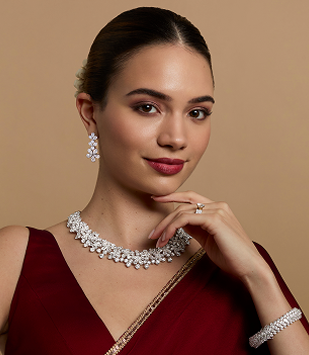
Traditionally, diamond jewellery in India sat at two moments: the wedding, and the milestone gift. Both are infrequent and both are typically family-mediated purchases. The economics of lab-grown have loosened that constraint. When a well-made diamond piece sits within reach of a discretionary budget, the purchase moves from occasion-driven to intent-driven — bought for a promotion, a birthday, or no reason at all.
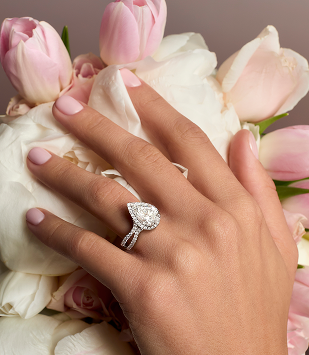
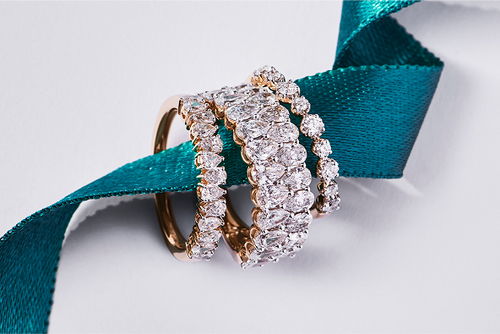
That single behavioural shift changes everything downstream. It changes what a brand designs, because everyday wearability now matters as much as ceremonial weight. It changes the retail model, because repeat customers require service relationships rather than transactions. And it changes marketing, because the person being addressed is the wearer, not the giver. It is visible in how diamond ring collections are now built — lighter settings, elongated silhouettes, pieces designed to move between a wedding and a Tuesday.
Where the capital is going
Investor activity through 2025 and 2026 has tracked this behavioural shift closely. Aukera, the Bengaluru-based premium brand founded in 2023 by Lisa Mukhedkar and Kumar Saurabh, raised ₹90 crore in July 2026 led by Alteria Capital, with InnoVen Capital, Lighthouse Canton and a leading bank participating — less than a year after a US$15 million equity round led by Peak XV Partners.
The company's store count moved from 13 to 35 in that intervening year, expanding beyond Bengaluru, Hyderabad and Delhi NCR into Pune, Lucknow, Dehradun and Visakhapatnam. Details of the round were reported by YourStory.
Aukera is not alone. Limelight Lab Grown Diamonds has raised significant capital while integrating backwards into manufacturing. Akoirah, backed by Augmont, is pursuing an aggressive store rollout. Solitario, Elevé and Réia are all raising against expansion plans. And the organised incumbents have arrived — Titan with Beyon, Trent with Pome, alongside PNG Jewellers.
Trust is the constraint
The bottleneck is no longer awareness. It is confidence.
A first-time lab-grown buyer has three unresolved anxieties: is this a real diamond, will it hold value, and will anyone be able to tell. The first is answered by certification. The second is answered by buyback and exchange policies. The third is answered by the product itself.
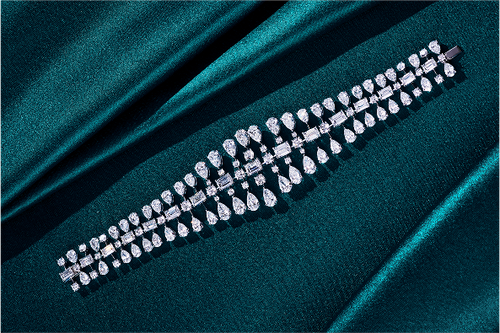
Brands are responding to all three with varying rigour. Certification depth is where the difference shows — layering light-performance measurement from GemEx, which grades brilliance, fire and scintillation, on top of conventional IGI grading of the 4Cs, and applying GCAL's 8X system for optical precision and craftsmanship. The reasoning behind that approach to certification is that the 4Cs describe what a stone is, not how it behaves in a room.
Whether every player invests in that depth will likely determine which brands survive the category's next phase. Certification is expensive and invisible until it is needed. It is also the only durable answer to a category-level trust question.
What momentum actually looks like
Category momentum is easy to overstate from funding headlines. The more reliable indicators are quieter: store networks expanding into tier-two cities rather than clustering in metros, repeat purchase rates rising, and the average transaction moving beyond the bridal window.
On all three counts, India's lab-grown diamond market is showing signs of moving from early adoption toward early majority in urban centres. The capital is a lagging indicator of that shift, not a leading one.
The technology was ready years ago. The consumer is ready now.