There is an underappreciated consequence of lab-grown diamonds becoming commercially viable at scale: a set of design constraints that governed fine jewellery for a century simply stopped applying.
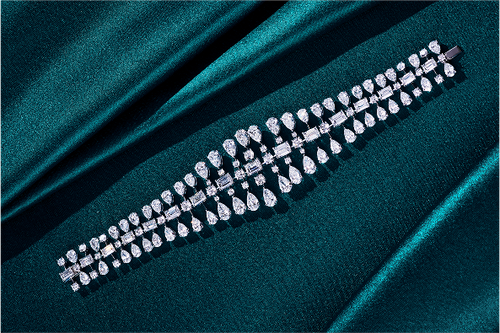
For most of modern jewellery history, design has been downstream of the rough stone. A designer worked within what the available material allowed. Cuts requiring exceptional rough were reserved for exceptional budgets. Matched sets of larger stones were slow and expensive to assemble. The jewellery was, in a real sense, shaped by scarcity.
Remove the scarcity and the creative brief changes entirely. This is where a meaningful share of the capital now entering the category is being deployed.
The funding context
In July 2026, premium lab-grown diamond brand Aukera announced a ₹90 crore raise — over US$10 million — led by existing investor Alteria Capital, with InnoVen Capital, Lighthouse Canton and a leading bank participating. The round came less than twelve months after a US$15 million equity round led by Peak XV Partners, with Fireside Ventures, Sparrow Capital, Prath Ventures and Alteria Capital.
The company stated that the capital would go toward accelerating store openings in new and existing markets, continued investment in design, product innovation and talent, and strengthening its omnichannel infrastructure. The full announcement is available via Business Standard.
Note the ordering. Design and product innovation are listed alongside retail expansion, not beneath it. That is a deliberate signal about where a premium brand believes its defensibility lies.
Innovation vector one: proprietary cutting
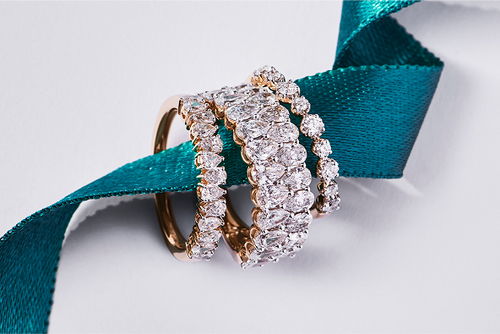
The most direct application of reliable stone supply is cut development. A cut is essentially an optical instrument — a set of angles and proportions engineered to manage how light enters, refracts and exits. Developing a new one requires iteration, and iteration requires material to experiment with.
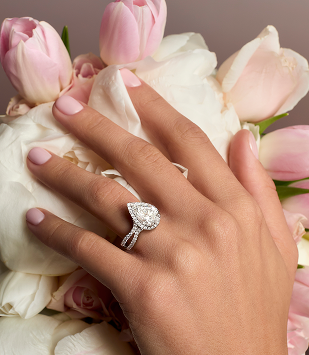
Aukera has built a portfolio of trademarked cuts and describes its approach as Light Science™ — the study of how proportion and geometry determine a stone's behaviour across changing light conditions. Small variables carry disproportionate weight: the height of a setting, the width of a band, the spacing around a stone all alter how a piece performs once worn.
What is strategically clear is that a cut a brand owns cannot be replicated by a competitor, which makes it one of the few genuinely defensible assets in a category where the raw material is otherwise commoditised.
Innovation vector two: verification
The second area absorbing investment is certification depth, and it exists because of a category-specific problem: trust.
Conventional diamond grading assesses the 4Cs — carat, cut, colour, clarity. IGI performs this at scale for lab-grown stones. But the 4Cs describe a diamond's characteristics rather than its performance. Two stones with identical paper can look noticeably different in the same room.
Aukera layers this with additional verification.
GemEx uses BrillianceScope technology to measure brilliance, fire and scintillation, grading each independently. GCAL's 8X system assesses optical symmetry, precision and craftsmanship. Applying both alongside IGI grading — and selecting only solitaires achieving the highest Very High rating across all three GemEx parameters, a threshold few stones clear — is expensive infrastructure that most customers will never consciously evaluate.
Its function is not to be understood but to be available: a verifiable answer to a first-time buyer's uncertainty. The full methodology sets out how the three standards work together.
Innovation vector three: retail experience
The third area is the store itself. Aukera operates exclusively company-owned stores, having grown from 13 to 35 in twelve months across Bengaluru, Hyderabad, Delhi NCR, Pune, Lucknow, Dehradun and Visakhapatnam.
Company-owned retail is the expensive choice. Its justification in this category is specific: lab-grown diamond buying involves education. A first-time customer arrives with questions about what she is buying, whether it holds value, and how it compares. Answering those questions consistently requires trained staff, controlled merchandising and a service standard that franchise models struggle to enforce.
Capital deployed into store networks in this category is therefore not simply distribution spend. It is trust infrastructure.
Why this phase matters
Categories built on a price advantage alone are fragile — the advantage erodes the moment competitors match it. What determines which brands survive is whether they convert an early cost advantage into something harder to replicate: proprietary design, verification standards, retail relationships, brand meaning.
The current wave of capital in India's lab-grown diamond market is, in effect, funding that conversion. With the market projected by Vantage Market Research to grow from US$2.8 billion in 2025 to US$11.6 billion by 2035, the brands making that transition now are the ones likely to still be standing when it completes.