India's lab-grown diamond market is moving quickly enough that the operating assumptions of 2023 are already outdated. Six trends are shaping what the category looks like today.
1. The purchase occasion is broadening beyond bridal
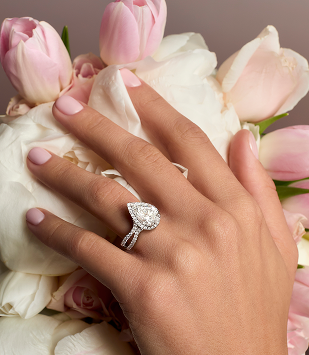
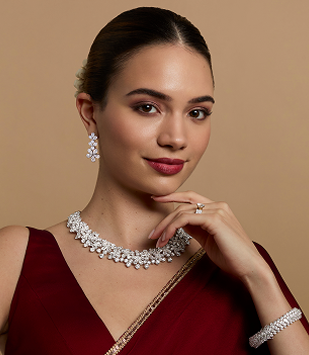
Diamond jewellery in India was, for decades, principally a wedding category. Lab-grown pricing has loosened that. When a well-designed diamond piece sits within a discretionary budget, the purchase decouples from the ceremony.
The commercial consequence is significant: repeat purchase becomes possible. A bridal customer buys once. A self-purchase customer buys several times across a decade. Brands designing for the second behaviour build fundamentally different ranges — lighter pieces, everyday wearability, price points that support impulse rather than deliberation.
2. Certification is becoming a competitive layer, not a compliance step
Standard practice is IGI grading of the 4Cs. That establishes what a stone is. It does not establish how it performs.
A subset of brands has begun adding light-performance certification. GemEx measures brilliance, fire and scintillation using BrillianceScope technology and grades each independently. GCAL's 8X system evaluates optical symmetry, precision and craftsmanship. Applying both alongside IGI — and selecting only stones achieving the highest rating across all three GemEx parameters — represents a materially deeper verification standard than the category baseline.
Expect this to become table stakes at the premium end within two years, and expect the brands that adopted it early to say so loudly.
3. Company-owned retail is winning at the top of the market
The franchise model scales faster. It is also harder to control — and in a category where the sale depends on educating an uncertain buyer, control matters.
Aukera operates exclusively company-owned stores, growing from 13 to 35 over twelve months, with omnichannel strengthening running in parallel to store expansion rather than after it.
4. Debt capital has entered the category
Perhaps the clearest signal of maturity. Aukera's ₹90 crore round in July 2026 was led by Alteria Capital with InnoVen Capital, Lighthouse Canton and a leading bank participating — venture debt rather than equity, less than a year after a US$15 million Peak XV-led round. The raise was reported by News18.
Diamond inventory is durable, non-perishable and retains value, making it unusually lendable. That gives the category access to non-dilutive growth capital that most consumer retail cannot obtain, and it raises the competitive bar for anyone without access to it.
5. Incumbent entry is reshaping the field
Titan launched Beyon. Trent entered with Pome. PNG Jewellers has moved in. Their arrival changes the competitive structure in two ways: it validates the category for cautious consumers, and it compresses the positioning available to challengers.
The practical effect is polarisation. Large retailers will compete on scale, distribution and price confidence. Challenger brands must compete on design distinctiveness, verification depth and brand meaning. The undifferentiated middle will struggle.
6. Expansion is moving to tier-two markets
Early networks concentrated in metros. That is changing. Aukera's move into Pune, Lucknow, Dehradun and Visakhapatnam alongside its Bengaluru, Hyderabad and Delhi NCR base is representative of a broader shift.
The logic is sound. Rent is lower, competition is thinner, and lab-grown pricing has disproportionate impact in markets where mined diamond jewellery was largely aspirational. A ₹1 lakh budget buys a materially more impressive piece than it did three years ago, and that difference registers more sharply outside the metros.
What ties them together
Every one of these trends is a move away from competing on price. Broader occasions, deeper certification, controlled retail, patient capital, sharper positioning, wider geography — none of them are cost-reduction strategies.
That is the category's central bet. Lab-grown diamonds arrived in India on a price advantage, but no serious player believes price is where the business ends up. With the market projected by Vantage Market Research to reach US$11.6 billion by 2035, the brands being built now are being built for what the category becomes, not what introduced it.