Buying a diamond involves a fair amount of research that somehow still leaves people with more questions than answers. The information exists. Most of it is either too technical to be useful or too vague to mean anything. This diamond buying guide cuts through to what actually matters, what to look for, what to ignore and what people most often wish they'd known earlier.
Table of Contents- How to Choose a Diamond: Start with the 4Cs
- Choose the Right Diamond Shape
- How to Pick a Diamond Based on Your Budget
- Diamond Certification: What to Check Before You Buy
- Common Mistakes to Avoid When Buying a Diamond
- Why Choose Aukera Jewellery for Certified Lab Grown Diamonds
- The cut has the greatest influence on how a diamond looks
- Colour and clarity both have grades where the difference is invisible to the naked eye but very visible on the price tag.
- Carat is weight, not size. How large a diamond appears depends as much on shape and cut as on carat.
- Certification from IGI, GIA or GCAL is non-negotiable. It is the only independent confirmation of what the diamond actually is.
- Lab grown diamonds are identical to mined diamonds in every way, except their origin.
How to Choose a Diamond: Start with the 4Cs
Consider the cut, colour, clarity and carat. Every diamond gets evaluated against these four characteristics and every diamond certificate records them. Knowing what each one actually changes about the diamond in front of you is where sensible decisions begin.
Cut: The Biggest Factor Behind Sparkle
Of everything on a grading report, cut is the one worth caring about most when figuring out how to buy a diamond. Because it depends completely on human skill, precision, and craftsmanship. It has more influence on how a diamond looks in real life.
A well-cut diamond reflects light in such a way that it creates brilliance, fire and scintillation all at once. The carat weight is not as detrimental as a weak cut. Two diamonds with identical certificates and identical grades can look completely different for this reason alone.
When the budget requires a trade-off, cut is almost always the last place to compromise.
Colour: Finding the Right Balance
Colour is graded D through Z. D is completely colourless. Z carries visible warmth. The gap between D and G is measurable under grading conditions and largely invisible once the diamond is set in a ring and worn in natural light.
G to I is where most buyers find the most sensible balance. The diamonds read as colourless in most settings without the premium attached to the D to F range. Yellow gold settings suit warmer grades. White gold and platinum suit the colourless end of the scale.
Clarity: Understanding Natural Inclusions
Clarity records what the laboratory found inside or on the surface of the diamond at grading. Most inclusions are invisible without magnification. The useful question is not which grade appears on the certificate but whether the diamond looks clean when you're actually looking at it.
VS2 and SI1 tend to be eye-clean in round brilliants. Emerald cuts are a different matter. The stepped faceting is more transparent and shows inclusions more readily, so clarity becomes a more meaningful consideration for that shape specifically.
Carat: Choosing the Right Size for Your Budget
Carat refers to the weight of the diamond, not the size of the diamond. An oval and a round brilliant at the same carat weight look completely different sizes once worn. How much the diamond is visible from the top depends on the shape and cut.
While 0.9 carats costs much lesser than 1.0. But on the finger, nobody can tell.
Choose the Right Diamond Shape
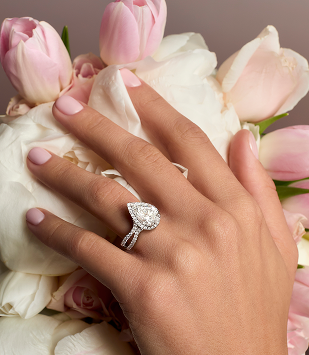
Shape is completely dependent on personal preference. Round brilliants are favourites because of their cut that accentuates the light performance. Plus the shape works across almost every setting and hand type. Ovals look bigger than their carat weight suggests and sit flatteringly on most fingers. Cushions are subtle, emerald cuts are architectural, with broad flashes of light rather than sparkle. Pear shapes are directional and strong.
For something further from the standard, Aukera's trademarked innovations take the benchmark somewhere different entirely. The Aukera Ashtalakshmi Solitaire™ works from an octagonal cut inspired by sacred geometry. The Aukera E3™ enhances the elongated emerald cut through proprietary faceting. The Aukera Orchid™ draws from the geometry of the orchid flower. These aren't refinements of existing cuts. They're different answers to the question of what a diamond can do.
How to Pick a Diamond Based on Your Budget
Starting with a carat weight and working backwards from there is how most people approach budgeting. It's also how most people end up disappointed.
Consider cut quality first. A smaller carat well-cut diamond looks more alive than a larger diamond cut to average proportions. The extra weight adds cost. It doesn't add the light performance that makes the difference visible on the hand.
Once the cut is fixed, colour and clarity can be balanced against carat to find what works. A slight reduction in colour grade from E to G is far less noticeable than a reduction in cut quality from excellent to good. That trade-off almost always goes one way in terms of what actually shows up in real life.
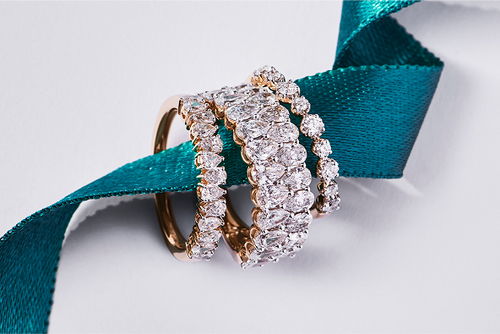
Lab grown diamonds change the value proposition significantly. One can get a bigger, better-cut diamond, which means design options that would otherwise require spending considerably more become realistic. Lab grown diamond rings at Aukera are certified and selected for light performance across the full range of carat weights and shapes.
Diamond Certification: What to Check Before You Buy
The certificate is the only independent record of what the diamond actually is. It is graded by a laboratory with no stake in whether you buy the diamond, which makes it the most reliable description available.
IGI is the most widely used for lab grown diamonds. GIA carries significant global recognition. GCAL goes further than standard grading by including light performance measurements alongside the 4Cs.
For select diamonds at Aukera, triple certification across IGI, GCAL and GemEx is provided. IGI covers standard grading. GCAL adds optical precision and symmetry.GemEx records brilliance, fire and scintillation as measured performance data. Together they give a more complete picture of the diamond than a single report can.
Verification is quick. The report number on the certificate should match what's inscribed on the diamond. Enter it into the laboratory's online tool and the full record comes up. No match, and the certificate needs questioning before anything else.
Common Mistakes to Avoid When Buying a Diamond
Carat gets too much attention. Size is easy to see. Light performance is what makes a diamond look brilliant. When it comes to performance, a well cut smaller diamond will always outperform a larger average-cut one.
Ignoring cut grade is usually a consequence of fixating on carat. The cut grade is on the certificate. It matters more than the other three grades put together.
Not getting certification is the riskiest decision in the whole process. Without an independent certificate, the description of the diamond comes only from the person trying to sell it.
Buying on price without understanding what drives the price differences is how people spend significantly and end up with something that looks ordinary. When it comes to how to choose a diamond, it is important to understand what each grade actually changes about the experience of wearing it.
Not seeing the diamond in person is the final one. Two diamonds with matching certificates can feel completely different once they're on the hand. Photographs flatten what a diamond does in light. The proportion, the setting height, the way it moves through a room. None of that is visible on a screen.
Why Choose Aukera Jewellery for Certified Lab Grown Diamonds
Every piece of lab grown diamond jewellery at Aukera starts with the diamond itself. Each is independently certified by IGI, with GCAL and GemEx certification added for collections where light performance is central to the design.
The collection is entirely in-house. Eight trademarked innovations, each developed around a different approach to cut, faceting or setting, are available exclusively at Aukera. Lab grown diamond earrings and diamond solitaire rings are selected through the same light performance criteria as the flagship solitaire collections.
The Diamond Bar at every Aukera store is where the comparison actually happens. Certificates side by side, diamonds on the hand, light performance visible rather than described.