Choosing an engagement ring is not always the most romantic process. Most men anticipate a weekend worth of research and a week to select the ring. But a few weeks later, they're still comparing settings, second-guessing shapes and trying to figure out what she'd actually want without asking her directly.
This engagement ring guide covers the whole process in the order it actually makes sense. Style first, then budget, then the ring itself. How to buy an engagement ring becomes considerably less complicated once the decisions are in the right sequence.
Key Takeaways- Her style comes before anything else. Metal preference, scale, the shapes she gravitates toward.
- Cut matters more than carat. A smaller, well-cut diamond in real light will outperform a larger one cut to average proportions almost every time.
- The two-months-salary rule was invented by a diamond company. Not a rule. Spend what's comfortable.
- Lab grown diamonds are physically and optically identical to mined diamonds. The difference is origin, and for most buyers, that's a straightforward decision once they've seen one in person.
- Certification from IGI, GIA or GCAL is non-negotiable. Without it, the only description of the diamond comes from the person selling it.
- Setting choice affects daily life more than most people think about at the point of buying. A delicate high-set ring on the wrong person becomes a daily problem.
- If the ring size is a guess, guess larger. Sizing down is easy. Sizing up is not.
- After-sales matters. A ring worn every day for decades needs a jeweller who will still be useful in year five.
- Understand Your Partner's Style Before Buying
- Set Your Budget Before You Start Shopping
- Know the Essential Parts of an Engagement Ring
- Pick the Perfect Engagement Ring Style
- Select the Right Metal
- Find the Correct Ring Size
- Things to Check Before Buying
- Common Mistakes to Avoid When Buying an Engagement Ring
- Where Should You Buy an Engagement Ring?
Understand Your Partner's Style Before Buying
Your fiance will wear the ring everyday. The ring will always be on her hand, so scoping out her style preference matters more than anything else.
Observe Their Jewellery Preferences
Look at the jewellery she already wears. Women who wear yellow gold wear it consistently. Women who reach for silver or white metal almost always want that in a ring too. Metal preference alone narrows the decision before anything else has to be figured out.
Scale matters too. Minimal, delicate jewellery suggests a lower-profile ring. Bolder, layered pieces suggest she'd want more presence. Solitaires suit the first instinct. Halos, three-stone designs and more intricate settings suit the second.
Shape preference shows up in the jewellery she admires. Ovals, emerald cuts, round brilliants. Each has a personality, and most women have fairly strong opinions about them.
Consider Their Lifestyle and Daily Wear
A high-set prong setting on someone who works with their hands is going to catch on things constantly. Women in medicine, in kitchens, in studios, tend toward settings that sit lower and don't interfere with daily life.
Bezel settings sit closer to the finger with metal wrapped around the diamond's edge. More protection, lower profile. Six prongs hold the diamond more securely than four. Worth thinking through before choosing something purely for how it looks.
Set Your Budget Before You Start Shopping
How Much Should You Spend?
The two-months-salary idea was invented by a diamond company decades ago. It was never a rule. Spend what's comfortable without creating stress that lingers into the marriage. A ring bought within a realistic budget and worn happily for twenty years is worth more than one that felt like a stretch on day one.
The same budget produces very different rings depending on how the decisions get made. Lab grown diamonds, for instance, make the decision considerably more flexible than most people expect before they start looking.
Focus on Quality and Meaning
Size is the most visible thing on a certificate but it is not what makes a diamond look beautiful once worn. A well-cut diamond at a smaller carat weight will outperform a larger one cut to average proportions in almost any real lighting condition. That difference is visible every day. The carat gap mostly shows on the price.
Buy something she'll want to wear. That sounds obvious. It gets overlooked more often than expected.
Know the Essential Parts of an Engagement Ring
Centre Stone
Shape, cut quality and light performance all live here.
Round brilliants remain the most chosen because the cut is developed specifically for light performance and the shape works across most settings and hands. Ovals look larger than their carat weight and lengthen the finger. Emerald cuts are clean and considered, with a more architectural quality than a brilliant cut. Cushions are softer. Pear shapes are directional.
Lab grown diamond engagement rings have made lab grown diamonds the centre stone choice for a significant and growing number of couples. Same diamond physically and optically, grown above ground rather than below it. The practical result is considerably more flexibility on carat and cut within a given budget. At Aukera, every lab grown diamond is certified by IGI and selected through Light Science™, which evaluates how each diamond performs in real light beyond what a standard grading report records. Enhanced Hearts & Arrows™ is a proprietary Aukera cut developed for exceptional optical symmetry, producing the distinctive hearts and arrows pattern visible under magnification.
Ring Setting
The setting determines a lot. How a ring looks and behaves on the hand, how much of the diamond is visible, and how well it survives daily wear. All this comes down to the setting.
Usually four or six prongs hold the diamond up and direct the light performance.
Bezels go the other way. A rim of metal hugs the stone's edge and sits it lower against the finger, so it's better protected from knocks. Halos work differently again. Smaller diamonds ring the centre stone, and the whole thing ends up looking bigger and more detailed than the centre stone alone would.
Appearance and practicality pull in different directions depending on the setting. Knowing which matters more for the person wearing it narrows the field quickly.
Band Metal
When the skin tone is warm and gold is preferred, yellow gold is the easy call.
White gold looks sharper, more modern. But it's not low-maintenance. That white shine is rhodium plating, and it wears off. Replate every couple years or it starts looking dull.
Rose gold's the odd one out. It works especially well on certain skin tones.
Platinum's the expensive one, and honestly, it earns it. Heaviest of the four, hardest wearing, stays white on its own forever. Costs more on day one, less over ten years.
Pick the Perfect Engagement Ring Style
Solitaire
One diamond, nothing else competing. The most chosen format for engagement rings and the one that holds up best over time. The shape of the diamond and the style of the setting do all the personality work within the solitaire format.
Halo
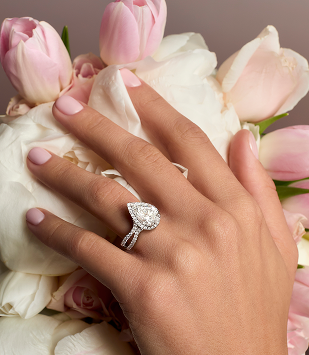
A halo isn't one diamond. It's a centre stone with a ring of smaller ones around it, and together they read bigger than a solitaire of the same carat weight. There's a simpler version too. In a hidden halo, those small diamonds sit underneath the centre stone rather than out where you can see them, so the detail's more of a discovery than a display.
Three Stone
One central diamond, two flanking ones. The shape combinations are genuinely interesting. A round between two tapered baguettes is a completely different ring from an oval with cushion sides. Same structure, very different result.
Vintage
Milgrain edges, pavé detailing, geometric lines. Borrowed from Art Deco and Edwardian design without pretending to be a period piece. Women who find plain rings a bit cold tend to land here.
Select the Right Metal
Yellow gold is the natural fit for warmer colour grades, and for a lot of women, it's simply what they already reach for. White gold does something different: it plays up colourless diamonds and gives the whole piece a cooler, brighter look. The catch is upkeep. The rhodium coating fades a bit over time, so it needs to be replated every so often. Rose gold ages best. It suits certain skin tones better than the other two, and it never really became a "moment" the way some finishes do, it's just been popular for years.
Find the Correct Ring Size
Borrowing a ring she already wears on the right finger is the most reliable method. Any Aukera store can measure it accurately from one of her rings itself.
If that's something that would raise her suspicion, perhaps someone close to her can find out discretely. If neither is possible, play it safe, and go slightly larger. Sizing down is simple to do but sizing up is tricky.
Things to Check Before Buying
Certification
An independent certificate from IGI, GIA or GCAL is the only reliable record of what the diamond actually is. IGI is the most widely used for lab grown diamonds. GCAL adds light performance measurements on top of standard grading. GemEx measures brilliance, fire and scintillation independently.
For select diamonds at Aukera, triple certification across IGI, GCAL and GemEx is available, giving a considerably more complete picture than a single report provides.
Warranty and After-Sales
It’s recommended to check beforehand what's covered in the warranty. Prong checks, setting security, polishing. A good jewellery house or jeweller should still be there and still be useful several years down the line.
Return Policy
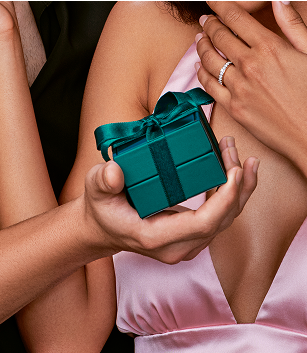
Especially relevant when buying for a surprise proposal. Ring size adjustments and exchanges happen. A clear exchange policy before purchase makes the whole thing less stressful.
Customisation
If she has something specific in mind that doesn't exist in the standard collection, ask what's possible before assuming nothing can be done. Most jewellers offer that flexibility.
Common Mistakes to Avoid When Buying an Engagement Ring
Prioritising the carat weight over all else is the most common mistake by far. A larger diamond that’s poorly cut will look flat next to a smaller well cut diamond. Light performance is what the eye actually responds to, not the number on the certificate.
Ignoring lifestyle when choosing a setting. A delicate high-set ring on someone who uses their hands constantly is a daily inconvenience.
Guessing the ring size confidently and guessing wrong. It happens more than anyone admits.
Buying without certification. Without an independent certificate the only description of the diamond comes from the person selling it.
Rushing because the proposal date is approaching. A ring that arrives slightly late is an easy thing to explain. A ring that turns out to be wrong is not.
Treating after-sales as an afterthought. A ring worn every day for years needs a comprehensive care plan.
Where Should You Buy an Engagement Ring?
A good jeweller hands you the certification before you think to ask for it, walks you through what the grading report actually means instead of glossing over it, and never rushes the visit along like there's somewhere else you need to be.
At Aukera, every lab grown diamond jewellery piece starts with an independently certified stone, chosen through Light Science™, which looks at how a diamond performs in real light rather than going by grade alone. Lab grown diamond rings and lab grown diamond solitaire rings come with IGI certification as standard, and collections built around light performance add GCAL and GemEx on top.
Eight trademarked solitaire innovations are available exclusively at Aukera, including Enhanced Hearts & Arrows™, Extra Brilliant™ and the Ashtalakshmi Solitaire™. The lab grown diamond proposal rings collection is specifically developed for the proposal moment. Engagement ring trends may change, but a diamond’s cut, colour and light performance are more useful to evaluate.