The decisions around buying a diamond are not what they were five years ago. Earlier, most buyers were deciding between round brilliant or oval. Platinum or gold. One carat or slightly under.
Now the first question tends to arrive much earlier.
Lab grown diamonds vs natural diamonds?
And surprisingly often, people walk into that conversation assuming there must be an obvious winner. There usually isn’t.
Because visually, the two are identical.
Not “similar.” Identical enough that even experienced jewellers cannot reliably separate them without specialised equipment once the stones are cut and set. Both are real diamonds.
Same carbon structure. Same brilliance. Same durability.
The actual difference between lab grown diamonds vs natural diamonds sits elsewhere:
- how the diamond is formed
- pricing
- rarity
- and what the buyer values once the diamond is actually on the hand
For some people, the geological history of a mined diamond matters enormously. Others take one look at a larger, more brilliant solitaire within the same budget and the conversation shifts quickly.
Key Takeaways- Lab grown diamonds vs natural diamonds is a comparison of origin, rarity, pricing and design flexibility.
- Both are real diamonds with identical physical, optical and structural properties.
- Lab grown diamonds are created in controlled environments, allowing greater consistency in quality and cut precision.
- Lab grown diamonds generally offer a cost advantage because mining and large-scale excavation are not involved.
- Natural diamonds continue to hold stronger rarity and resale positioning.
- Lab grown diamonds allow greater flexibility in shapes, colours and contemporary jewellery design.
- What Are Lab Grown Diamonds?
- How Are They Made?
- What Are Natural Diamonds?
- How Do They Form?
- Lab Grown vs Natural Diamonds and Their Key Differences
- Appearance & Quality
- Price Comparison
- Durability & Longevity
- Environmental Impact
- Ethical Considerations
- Certification & Grading
- Resale Value
- How do experts distinguish between lab grown and natural diamonds?
- Conclusion
What Are Lab Grown Diamonds?
Lab grown diamonds are real diamonds.
Worth saying directly because many buyers still assume they are imitation diamonds. They are not.
A lab grown diamond has the same chemical composition, hardness and optical behaviour as a natural diamond. Once polished, it reflects light the same way too.
The only real difference is origin.
Natural diamonds form naturally underneath the earth’s surface over billions of years. On the other hand, lab grown diamonds are created using technology that mimics the same conditions inside a tightly controlled environment.
Scientifically, the difference matters. Visually, it doesn’t.
This is partly why lab grown diamonds vs real diamonds has become such a heavily searched topic. Most people don’t realise just how technically alike the two diamonds are until they go deep into research mode.
As it stands today, lab grown diamonds are widely chosen across engagement rings, bridal jewellery and statement solitaires. This is mainly because the value behaves differently.
And once that happens, people start choosing differently too.
How Are They Made?
There are two primary methods used to create lab grown diamonds:
| Method | Process |
|---|---|
| HPHT (high Pressure High Temperature) | Underground conditions are recreated under intense heat and pressure |
| CVS (Chemical Vapour Deposition) | The diamond crystals are formed layer by layer using carbon-rich gas |

Different technologies. Same material in the end.
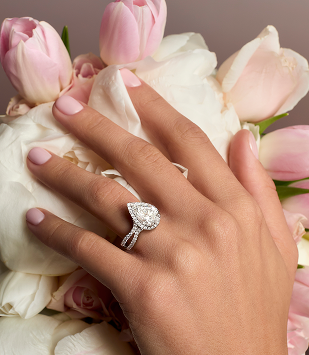
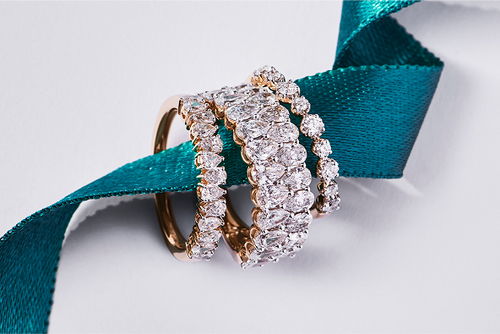
At Aukera, this has created far more room for experimentation in cut precision, scale and light performance. Diamonds like the Extra Brilliant™ solitaire come from approaching diamonds from a design perspective first.
Production is also far more controlled in lab grown diamonds.
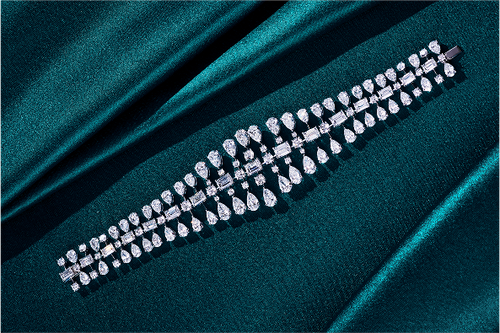
Which means unusual cuts, elongated proportions and coloured diamonds become much easier to explore from a design perspective.
That flexibility changes jewellery design more than people initially expect.
What Are Natural Diamonds?
Natural diamonds form beneath the earth’s surface under intense pressure and heat.
The timeline still sounds unreal. Billions of years.
Volcanic activity gradually pushes these stones upward through kimberlite rock formations, where they are later mined.
For many buyers comparing lab grown diamonds vs mined, this geological history is the appeal. The rarity feels tangible.
Others care far less about origin once the diamond is actually worn and performing visually the exact same way a lab grown stone would.
How Do They Form?
Natural diamonds begin their journey approximately 150 to 200 kilometres under the earth’s surface.
When carbon atoms crystallise under extreme pressure over vast periods of time, volcanic eruptions eventually bring them closer to the surface of the earth.
The process cannot be accelerated naturally. Which is part of why natural diamonds continue to hold stronger rarity positioning globally.
Lab Grown vs Natural Diamonds and Their Key Differences
Most people entering the difference between lab grown and natural diamonds conversation expect visual differences first.
That expectation disappears fairly quickly once the stones are viewed side by side.
| Aspect | Lab Grown Diamonds | Natural Diamonds |
|---|---|---|
| Formation | Created using HPHT/CVD technology | Formed naturally beneath the Earth |
| Appearance | Same brilliance and optical behaviour | Same brilliance and optical behaviour |
| Pricing | More accessible | Charges premium for identical diamonds |
| Durability | More accessible | Higher rarity pricing |
| Environmental Impact | No mining required | Mining impact varies |
| Certification | IGI / GIA certified | IGI / GIA certified |
| Resale Value | Same buy-back and exchange as natural diamonds | Natural diamonds do not have a stronger resale |
Appearance & Quality
Visually, there is no meaningful difference between lab created diamonds vs natural diamonds once they are cut and polished properly.
Cut quality matters far more than origin ever will.
A beautifully cut lab grown diamond will outperform a poorly cut natural one very quickly once light enters the equation.
That usually comes down to precision, not provenance.
Lab grown diamonds also allow far greater flexibility in shapes, proportions and coloured diamonds because production is more controlled and scalable.
Which opens up much wider possibilities in jewellery design, especially for contemporary settings, elongated cuts and larger statement solitaires.
Price Comparison
Price is usually where the conversation shifts.
Lab grown diamonds have a significant cost advantage over natural diamonds of similar quality and size. For smaller diamonds, lab grown diamonds can cost at least 60% less than mined diamonds. Once the size crosses one carat, the cost differential often widens dramatically, sometimes reaching 90%.
This is primarily because there is no mining cost, large-scale excavation or import-heavy sourcing structure involved in the case of lab grown diamonds.
People who expected compromises often end up reconsidering them entirely.
Larger carat sizes suddenly become realistic. Better clarity grades too. Stronger cuts. More ambitious settings. Gifting a diamond becomes a far easier choice to make.
For many people comparing lab grown vs mined diamonds, this becomes the deciding factor once they start trying pieces on rather than simply reading specifications online.
Durability & Longevity
Both, lab grown diamonds and natural diamonds, rank 10 on the Mohs hardness scale. The highest possible rating.
So when people compare lab made diamonds vs natural diamonds for durability, the practical answer is simple: both are built for everyday wear over decades.
A good ring remains a good ring.
Environmental Impact
This section gets oversimplified online constantly.
Lab grown diamonds avoid mining entirely. No earth displacement. No large-scale excavation. Significantly lower water usage compared to traditional mining for a single carat.
That matters to many buyers.
That said, diamond-growing technology still consumes substantial energy, particularly at scale. Natural diamond mining varies too depending on sourcing standards, restoration practices and mining operations.
So the sustainability discussion is rarely as simple as headlines make it sound.
Ethical Considerations
The matter of ethics and sourcing transparency is far more relevant today than it once was.
Lab grown diamonds generally offer shorter and more traceable supply chains.
There is also no large-scale earth displacement involved in creating them. No mining excavation. No loss of human life associated with extraction. Even water consumption per carat is significantly lower compared to traditional mining.
Natural diamonds already move through certification and sourcing systems that are far more regulated today than they once were.
But most buyers are not really treating this as a moral debate anymore.
Some buyers still feel somewhat connected to the history attached to natural diamonds. Others are recognising that rarity and exclusivity are no longer associated with mined diamonds alone, especially once exceptional cuts, distinctive shapes and stronger design sensibilities become important.
A lot of modern brides are leaning toward lab grown diamonds for exactly that reason. The budget simply allows more room to choose what they actually want.
Certification & Grading
Both lab grown and natural diamonds are graded using the same systems. IGI and GIA assess:
- cut
- colour
- clarity
- carat weight
using identical standards for both categories.
At Aukera, diamonds are studied heavily for light performance under movement because showroom lighting can flatter almost anything temporarily.
The higher quality diamonds continue catching light unexpectedly hours later.
Mid-conversation. Visit our nearest store to experience this mesmerising light performance.
Resale Value
For many buyers, resale is no longer viewed very differently across lab grown and natural diamonds, especially as buyback and exchange policies continue becoming more established across the industry.
At Aukera, lab grown diamonds come with lifetime buyback and exchange, which makes the diamond jewellery far more dependable for long term purchases.
How do experts distinguish between lab grown and natural diamonds?
Not visually.
Gemological laboratories use specialised testing equipment to identify structural growth patterns specific to natural or lab grown formation.
Natural diamonds contain geological growth markers formed underground over billions of years. Lab grown diamonds develop different signatures depending on whether they were created using HPHT or CVD methods.
Without that equipment, there is no reliable visual way to distinguish between them. Which is why certification matters so much.
Conclusion
The lab grown diamonds vs natural diamonds discussion is no longer really about whether one is “real.”
That part is settled.
The decision usually comes down to:
- rarity
- size
- design freedom
- long-term value perception
- craftsmanship
- or simply how the diamond feels once worn
Some buyers will always love the geological story attached to natural diamonds.
Others look at a larger, brighter solitaire within the same budget and decide fairly quickly.
Most people searching for lab grown diamond rings know once they try the right piece on.
The hand tends to make the decision before the spreadsheet does.