Take the same diamond. Put it in two different settings. You’ll end up with two rings that look nothing like each other.
The type of solitaire setting is doing as much work as the diamond. How high the diamond sits, how much light gets to it, how it survives daily wear. All this comes down to solitaire setting, not the diamond.
Let’s look at the five main types of settings, and how to pick the right one.
Table of Contents- What Is a Solitaire Setting?
- Different Types of Solitaire Settings
- Solitaire Setting Styles: How They Differ
- How to Choose the Right Solitaire Setting
- Which Solitaire Setting Makes a Diamond Look Bigger?
- Pros and Cons of Different Solitaire Settings
- Solitaire Setting Metals and Customisation Options
- Solitaire Setting Care and Maintenance
- The setting changes how a solitaire looks when worn.
- There are 5 main settings, each gives the ring a different character.
- Prongs showcase more diamond while bezels and flush settings keep it tucked in.
- A high setting gives more height, while a low setting feels easier for everyday wear.
- Diamond shape is worth considering before settling on a setting.
- A setting can change the diamond's visual presence, but not its actual size.
- The most practical choice depends on how you wear your ring.
What Is a Solitaire Setting?
Everything around the diamond and beneath it. It’s the structure that influences how the ring fits, how much of the diamond is visible and how the ring ages.
The same diamond with different settings makes for two completely different rings.
How Does a Solitaire Setting Hold the Diamond?
Most settings hold the diamond through one of two approaches: gripping it from specific points around the edge, as prongs do, or encasing the edge in metal, as a bezel does. Tension settings use the pressure of the band itself. Flush settings seat the diamond directly into the metal.
Each approach creates a different relationship between the diamond and the band. Different appearance, different practicality, different ring.
Why Is the Setting Important for a Solitaire Ring?
In a multi-diamond ring, the overall design shares visual responsibility across several diamonds. In a solitaire, one diamond does everything. The setting either supports that or undermines it.
A setting that exposes too much of the diamond can leave it vulnerable. One that protects too heavily can reduce the diamond's visible presence. The best solitaire setting for any ring is the one that balances what the wearer actually needs from it day to day.

Different Types of Solitaire Settings
Prong Solitaire Setting
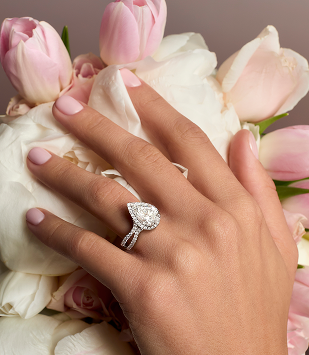
The most chosen solitaire ring setting by a significant margin. Prongs, four or six of them, grip the diamond at specific points and hold it without covering much of the surface. Light gets in from multiple angles. The diamond sits higher than in an enclosed setting, visible and prominent, with the classic silhouette most people picture when they imagine a solitaire.
The catch is exposure. Prongs snag on fabric and hair more than enclosed settings do. The tips wear over time and need checking periodically to confirm the diamond is still held securely.
Four prongs expose more of the diamond. Six offer more security. The choice between them is partly about aesthetics and partly about how much daily wear the ring will actually see.
Solitaire rings at Aukera with prong settings are available across multiple shapes and carat weights.
Bezel Solitaire Setting
Here, a thin metal band wraps around the edge of the diamond, holding it flush and secure. No prongs. No exposed points. The diamond sits close to the finger in a lower, cleaner profile.
Women who use their hands a lot tend to gravitate toward bezels eventually. The aesthetic is clean. From above, a rim of metal frames the diamond rather than gripping it from points. The ring reads differently, more contained, more contemporary.
The one consideration is that the metal rim reduces how much of the diamond's edge is visible from the side. Most people find the protection and wearability worth that trade.
Cathedral Solitaire Setting
The band arches upward on both sides of the diamond, creating elevated shoulders that support the centre diamond at a higher position than a standard prong setting. The effect is architectural. The diamond appears more prominent, the ring more formal.
The raised shoulders give the diamond more visual presence and let light in from beneath the diamond as well as from the sides.
The height is worth thinking about practically. The ring sits further off the finger, which increases the likelihood of catching on things and can make wedding band pairing slightly trickier. Curved or contoured bands tend to sit more naturally alongside a cathedral setting than straight ones do.
Tension Solitaire Setting
The diamond appears to float between two ends of the band, suspended by the pressure of the metal itself rather than held by prongs or enclosed in a bezel. Very little metal visible around the diamond. The result is modern and striking.
Getting it right requires precise engineering. The band has to exert exactly the right force. Too little and the diamond isn't secure. Too much and the diamond is under stress. Tension settings are typically made for a specific diamond rather than adjusted after the fact.
What you get for that precision is an unobstructed view of the diamond from almost every angle.
The practical consideration is that the diamond is less protected than in a prong or bezel setting. The exposed underside is more vulnerable to impact. For very active daily wear, worth factoring in.
Flush Solitaire Setting
The diamond sits within the band itself, level with or just below the metal surface. Very low profile. Minimal height above the finger.
Strong protection comes with that. The diamond is largely recessed from direct impact. Almost no snagging in daily use. For anyone who wants to wear a ring constantly without thinking about it, flush settings remove most of the obstacles.
The look is deliberately quiet. The diamond is there but contained. The band does as much visual work as the diamond. Suits people who prefer jewellery that doesn't announce itself.

Solitaire Setting Styles: How They Differ
Open vs Enclosed Solitaire Settings
Open settings like prongs expose the diamond to light from multiple directions but leave the diamond more vulnerable. Enclosed settings like bezels protect the diamond's edge but reduce how much of the diamond is visible from the side.
Neither is universally better. Open settings tend to suit people who prioritise the diamond's visual performance. Enclosed settings tend to suit people who prioritise durability and ease of wear.
Low-Profile vs High-Set Solitaire Settings
A high-set solitaire gives the diamond more prominence and visual presence. It catches light differently and tends to look more formal.
A low-profile setting sits closer to the finger and moves more naturally through daily life. It catches on things less and tends to suit people who want to wear their ring without thinking about it.
A very high-set engagement ring next to a straight wedding band often leaves a visible gap. Lower-profile settings sit more naturally alongside a wider range of band styles without any awkward spacing.
Classic vs Modern Solitaire Settings
Prong and cathedral settings have a traditional character that reads immediately as a classic engagement ring. Most people's mental image of a solitaire is a prong-set round brilliant, elevated slightly above the band.
Women who want a ring that fits into how they already dress, rather than one that reads immediately as bridal jewellery, tend to land on bezel or flush settings. The same diamond in a bezel instead of a prong reads as a different object entirely.
How to Choose the Right Solitaire Setting
Consider Your Diamond Shape
Round brilliants work well in almost any setting. The symmetrical shape suits prong, bezel, cathedral and tension equally well.
Oval and pear shapes show beautifully in prong settings where the full outline is visible. A bezel around an oval or pear can flatten the pointed ends slightly and reduce the elongated appearance that makes those shapes distinctive.
Emerald and cushion cuts have a flat, open faceting pattern that performs without needing height. A lower setting suits their character well.
Marquise cuts have pointed ends that are the most exposed part of the diamond. A setting that protects those tips, V-prongs or a partial bezel, is worth considering.
Consider Your Lifestyle and Everyday Wear
A ring worn through an active day needs different consideration from one worn occasionally.
Prong settings catch. Not always dramatically, but consistently over time. Women who work in healthcare, food, design or anywhere their hands are in constant use tend to find lower-profile or enclosed settings considerably more practical.
Bezel and flush settings are the most practical for daily wear. Cathedral settings suit women who remove their ring during active tasks. Tension settings suit moderate daily wear rather than the most demanding environments.
Consider Diamond Visibility and Light Exposure
The more open the setting, the more light reaches the diamond. Prong settings expose the most surface area. Bezel settings reduce light entry slightly around the edge. Flush settings contain the diamond most fully.
For diamonds selected specifically for light performance, an open setting tends to show that performance most clearly. At Aukera, lab grown diamonds across the solitaire collections are evaluated through Light Science™, which makes the setting choice particularly relevant to how each diamond's performance reads in real conditions. These considerations extend across different categories of jewellery offered from solitaire earrings, solitaire pendants, solitaire necklace, solitaire mangalsutra, and mens solitaire jewellery.
Consider Your Preferred Ring Style
Prong and cathedral settings put the diamond clearly in charge of the design. Everything else is secondary.
Bezel and flush settings let the metal and the diamond share the visual weight. The ring feels more like a complete object rather than a diamond held up on a band. Suits people who want the jewellery to feel considered rather than declarative.
A tension setting suits someone who wants the ring to feel architecturally considered, contemporary and distinctly non-traditional.
Consider Your Wedding Band Compatibility
Engagement ring and wedding band together is the practical reality for most people. Choosing the engagement ring setting with the band in mind is considerably more useful than choosing it in isolation.
High-set prong and cathedral settings can create a gap between the engagement ring and a straight wedding band. A curved or contoured band solves this. Low-profile bezel and flush settings tend to sit alongside straight bands without any gap.
The width of the band relative to the setting height also affects the overall appearance. A very wide band next to a delicate prong setting can look proportionally odd. A slimmer band tends to suit higher-set rings better.

Which Solitaire Setting Makes a Diamond Look Bigger?
The setting can change how large the diamond appears without changing the diamond's actual dimensions.
An open prong setting exposes more of the diamond's surface and allows more light to return through the top, which tends to make the diamond look brighter and more present on the hand.
A fine, slim band makes the centre diamond look proportionally larger. A wider band can have the opposite effect.
Height helps too. A higher-set diamond draws the eye upward and creates more visual presence than the same diamond sitting flush with the finger.
What the setting cannot do is increase the diamond's actual millimetre dimensions. A 1-carat diamond in a prong setting still measures 6.4mm across. The setting just shows more or less of it.
Pros and Cons of Different Solitaire Settings
| Setting | Main Advantage | Potential Drawback | Best Suited For |
|---|---|---|---|
| Prong | Maximum diamond visibility | More exposed, can catch | Classic styles, diamond-forward designs |
| Bezel | Strong protection | Less diamond edge visible | Active lifestyles, modern aesthetics |
| Cathedral | Height and presence | More elevated, gap with wedding bands | Traditional and formal looks |
| Tension | Modern, floating appearance | Requires precise construction | Contemporary styles |
| Flush | Low profile, practical | Less visual presence | Everyday wear, minimal styles |
Solitaire Setting Metals and Customisation Options
Choosing the Right Metal for a Solitaire Setting
Yellow gold's warmth works particularly well with diamonds in the G to J colour range.
White gold reads cooler and sharper, suits colourless diamonds, but needs periodic rhodium replating as the coating wears. Worth factoring in before buying.
Rose gold suits certain skin tones and has a softness that works across round brilliants and cushion cuts. Popular consistently rather than seasonally.
Platinum stays white without any maintenance, costs more at the start and less over the years. For anyone planning to wear the ring daily for decades, that trade-off tends to make sense.
Customising Prongs and Setting Details
Prong shape makes a difference to the finished ring. Rounded prong tips are the most common and the most practical. Claw prongs have a sharper, more architectural appearance.
The number of prongs affects both security and appearance. Four prongs expose more of the diamond. Six offer more security and suit round brilliants particularly well. Some fancy shapes use V-prongs at pointed ends for additional protection.
Setting height is adjustable within certain ranges and affects how the diamond sits above the finger, how it pairs with a wedding band and how the ring moves through daily life.

Solitaire Setting Care and Maintenance
How to Keep a Solitaire Setting Secure
Prong settings need the most attention over time. Prong tips wear with daily use and can loosen gradually without obvious signs. A professional check once a year is worth doing.
Look out for any movement in the diamond itself. If the diamond shifts or rocks slightly when touched, the prongs need attention before the diamond can work loose.
Bezel and flush settings are more stable long-term but should still be checked periodically for any damage to the metal rim.
How to Clean a Solitaire Ring Setting
Soft toothbrush, warm water, and a small amount of mild dish soap. Gentle scrubbing around and under the prongs removes the buildup that dulls diamonds over time. Works for most settings.
Ultrasonic cleaners are fine for prong and bezel settings. Use cautiously with tension settings. The vibration can occasionally affect the precise metal tension the diamond relies on.
Professional cleaning at any Aukera store includes a full setting inspection alongside the clean. For a ring worn daily, that combination is worth doing once a year.