The solitaire has been around for over a century. It hasn't gone anywhere. That’s because one gorgeous diamond set simply, without distractions, is genuinely difficult to improve on.
Let’s look at what a solitaire diamond really is, how it differs from other diamond jewellery and what to actually look for when choosing one.
Table of Contents- What Is a Solitaire Diamond?
- Solitaire Diamond Meaning in Jewellery
- What Makes a Diamond a Solitaire?
- Key Characteristics of a Solitaire Diamond
- Difference Between Solitaire and Diamond
- Popular Solitaire Jewellery Designs
- How to Choose the Right Solitaire Diamond
- Why Choose Aukera for Solitaire Diamond Jewellery?
- A solitaire features one full-cut diamond and nothing to distract from it. Solitaire describes the style of the jewellery, not a different type of diamond.
- With just one diamond on show, every detail stands out. The cut, proportions and the way it handles light all make a visible difference.
- The carat doesn’t have much influence on how large a diamond appears.
- Solitaires come in all shapes, including round, oval, emerald, pear, cushion and marquise diamonds.
- A setting changes how much of the diamond is visible and how the jewellery sits when worn.
- Certificates are useful when it comes to comparing grades. The final choice is still best made after seeing the diamond in person.
- Aukera has spent years specialising in solitaire diamonds, developing signature innovations such as the Aukera Orchid™, Enhanced Hearts & Arrows™ and Extra Brilliant™ collections. Guided by its Light Science™ philosophy, Aukera evaluates brilliance, fire and scintillation alongside the traditional 4Cs to create solitaires with exceptional light performance.
What Is a Solitaire Diamond?
One diamond. Set alone. Nothing else in the design competes with it.
That's the simplest explanation. A solitaire diamond places the focus on that single diamond- the cut, the colour, how it catches light across a room. There's no surrounding detail to compensate for a diamond that isn't working. Which is why the diamond itself matters so much more in this format than in almost any other.
Solitaire Diamond Meaning in Jewellery
Solitaire comes from the Latin solitarius. Alone, solitary. One diamond set as the centrepiece, without embellishment.
A ring with one central diamond is a solitaire ring. A pendant with a single drop diamond is a solitaire pendant. The format stays consistent. What changes is the shape, the setting, the size of the diamond inside it.
Solitaire meaning in jewellery has come to stand for intentionality too. When there's nothing else in the design, the diamond carries everything. People tend to choose more carefully because of that.
What Makes a Diamond a Solitaire?
One diamond, centred, with nothing else pulling focus.
Not the size. Not the shape. Not the value. A half-carat round brilliant in a plain four-prong setting is as much a solitaire diamond as a three-carat oval in something more considered, as long as the design is built around that one diamond and nothing else.
Solitaire jewellery meaning has stayed consistent across a long time and a lot of different price points. One diamond, held well, left to do what it does.
Key Characteristics of a Solitaire Diamond
Single Centre Stone Design
There's a reason the solitaire has remained so recognisable.
It doesn't ask your eye to decide where to look.
Everything leads to the centre. The band becomes incidental. The setting steps back. Even the proportions of the piece are worked out with the diamond in mind. Strip away the extra details and what remains is one stone carrying the entire design.
If you're looking at lab grown diamond rings, earrings or pendants, the format of a solitaire stays the same. One diamond. One focal point.
Minimal Yet Elegant Setting
Take the diamond out of a solitaire and there isn't much left.
A band. A setting. A few millimetres of metal doing an enormous amount of work.
Some settings hold the diamond with four claws. Some with six. Others wrap a fine rim of metal around the stone. Each changes the look slightly. None changes the idea. The setting exists to support the diamond, not to compete with it.
That's why even small differences matter. A thicker band can make a diamond appear smaller. A lower setting sits closer to the finger and feels more practical for everyday wear. A higher setting catches more light but changes the profile of the ring entirely.
Focus on Diamond Quality and Brilliance
A solitaire gives the eye a singular focus. The first thing people notice is usually the size. The second is almost always the cut.
Two diamonds can have the same carat weight and behave very differently under light. Much of that comes down to the cut. If the proportions are off, even a diamond with impressive grades may appear flat.
That’s the reason jewellers spend so much time talking about cut quality. In a solitaire, it matters tremendously.
Many people exploring lab grown diamonds choose solitaire designs for the same reason. With only one centre stone, the quality of the diamond is easier to appreciate.
Difference Between Solitaire and Diamond: Key Differences Explained
The main difference between a solitaire and a diamond is that a diamond is the gemstone and a solitaire is the design.
Sometimes the two words are often used interchangeably, but in fact the difference between solitaire and diamond is quite simple and straightforward. Diamond is the gemstone. Solitaire is simply how it has been presented.
| Solitaire | Diamond |
|---|---|
| A style of jewellery | A gemstone |
| One centre stone | Can be one or many stones |
| Seen in rings, earrings, pendants and necklaces | Used in almost every kind of jewellery |
| Describes the design | Describes the stone |
| May feature natural or lab grown diamonds | May be set in solitaire, halo, cluster and many other styles |
Popular Solitaire Jewellery Designs
It’s now well established that a solitaire is not a piece of jewellery, rather it’s a way of designing one.
Whether it’s rings, earrings, pendants or necklaces, the idea remains the same. One diamond takes centre stage. Everything else exists simply to support it. That simplicity is what allows the solitaire to work across so many different styles and occasions.
Solitaire Engagement Rings
No jewellery style is more closely associated with engagements than the solitaire ring.
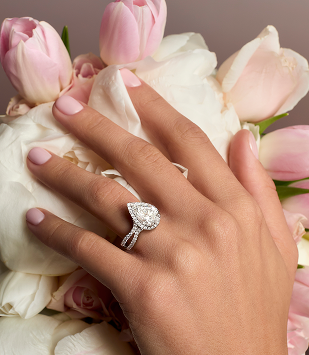
For centuries, a solitaire engagement ring has come to mark the most important decision in a couple's life. Its appeal lies in its simplicity and presence. There’s nothing much competing for attention. The entire design rests on one stunning diamond.
Solitaire rings come in many shapes, from round and oval to emerald, pear and cushion cuts. Aukera’s lab grown diamond rings pair exceptional diamonds with contemporary settings, made for the proposal and all the years that follow.
Solitaire Earrings
Diamond studs are often the first fine jewellery purchase people make and the pair they wear most often afterwards.
A solitaire earring asks very little of the rest of your wardrobe. It works with office wear, festive dressing and everything in between. Size changes the look, but never the idea.
Discover Aukera's collection of Lab grown diamond earrings, crafted around independently certified diamonds and designed for women who choose beautifully.
Solitaire Pendants
Solitaire pendants come in many moods. A smaller diamond is easy to wear every day. A larger stone can hold its own with evening clothes. The chain length matters too, changing where the diamond sits and how it works with different necklines.
Aukera's Lab grown diamond pendants bring together certified diamonds, considered proportions and settings made for beauty and comfort.
Solitaire Necklaces
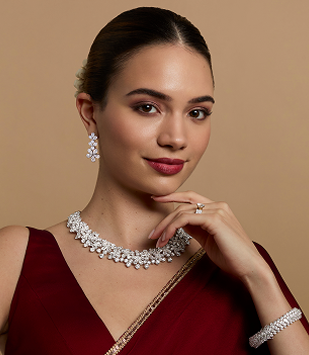
Solitaire necklaces take the idea beyond a single stone on a chain. The diamond remains central, but the design may extend around the neckline through considered goldwork, additional detailing or a more elaborate silhouette.
At Aukera, solitaire necklaces range from refined designs made for regular wear to magnificent diamond creations that come into their own at celebrations and grand occasions.
Popular Diamond Shapes for Solitaires
| Diamond Shape | What You Will Notice |
|---|---|
| Round | Bright, balanced and familiar |
| Oval | An elongated shape with a larger spread across the finger |
| Emerald | Clean lines and broad flashes of light |
| Pear | A distinctive shape with one rounded and one pointed end |
| Cushion | Soft corners and a fuller outline |
| Marquise | Long, tapered and dramatic |
How to Choose the Right Solitaire Diamond
With a solitaire, there is only one diamond to consider, which makes every detail easier to notice. Begin with the stone, try a few shapes on, then see what changes when the setting and metal change.
Consider the 4Cs of Diamond Quality
If you're buying a solitaire, you'll come across the 4Cs quite quickly. They help you compare one diamond with another, but it's worth understanding what each one actually tells you.
Colour measures how colourless a diamond is. Most white diamonds are graded on a scale from D to J, where D is completely colourless and the letters move gradually towards a warmer, slightly yellow tint.
Clarity looks at the tiny natural inclusions and surface markings found in a diamond. The scale runs from IF (Internally Flawless) through VVS, VS, SI and I, with each grade describing how visible those characteristics are.
Carat refers to the diamond's weight, not its size. That's why two diamonds with the same carat weight can look surprisingly different when placed side by side.
Cut is about how well a diamond's facets have been shaped and aligned. A well-cut diamond reflects and returns more light, giving it greater brilliance, fire and sparkle. At Aukera, every solitaire is an Ideal Cut, and the collection also includes signature cuts developed exclusively by the brand.
A certificate is the best place to compare the 4Cs. Once you've narrowed down your options, seeing the diamonds in person often makes the final decision much easier.
Choose the Right Diamond Shape
Diamond shape almost always comes down to personal preference rather than technicality.
Round brilliants are known for their brightness and familiar symmetry. Ovals for how beautifully they spread across the finger. Emerald cuts are loved for their distinctive clean lines. Pear, cushion and marquise diamonds each bring something different to the table.
Try more than the shape you arrived looking for. Diamonds have a habit of changing people’s minds once they leave the tray and land on the finger.
Select a Suitable Setting and Metal
The setting of the diamond can vastly alter the experience of the jewellery.
Four prongs leave more of the stone visible. Six prongs create a different outline and hold the diamond at two additional points. A bezel traces the diamond in metal and gives the piece a cleaner, more contemporary finish. For rings worn every day, the height of the setting is worth checking too. Notice whether it feels comfortable and whether it catches against clothing.
Then look at the metal beside the diamond. White gold and platinum keep the overall appearance crisp. Yellow gold adds warmth. Rose gold changes the mood again.
The smallest details are often easier to judge on the finger than on paper.
INFOGRAPHIC
What Makes a Solitaire?
ONE DIAMOND
The only stone in focus
↓
THE SHAPE
Round, oval, emerald, pear, cushion or marquise
↓
THE SETTING
Four prongs, six prongs or bezel
↓
THE METAL
White gold, yellow gold, rose gold or platinum
↓
ONE SOLITAIRE
Chosen entirely your way
Why Choose Aukera Jewellery for Solitaire Diamond Jewellery?
At Aukera, the 4Cs are where the search begins, not where it ends.
Every solitaire is guided by Aukera Light Science™ and studied for the way it handles light. Brilliance, fire and scintillation are considered alongside cut, colour, clarity and carat. Every diamond is independently certified by IGI, while select solitaires are also evaluated by GemEx or GCAL for light performance and optical precision.
Then there are the signature cuts found only at Aukera. The Aukera 161 has 161 facets arranged across ten layers. The Aukera Orchid turns the geometry of a flower into a 300-facet solitaire. The Aukera E3™ brings greater brilliance to the clean, elongated lines of an emerald cut. The Aukera Extra Brilliant™ is created to maximise light return, while Aukera Enhanced Hearts & Arrows™ reveals twelve hearts and twelve arrows instead of the traditional eight.
The collection also moves beyond familiar shapes. Champagne Diamonds™, the octagonal Ashtalakshmi Solitaire™ and Exotic Diamonds™ offer a different starting point for those who already know what they do not want.
Aukera’s jewellery experts can help you compare shapes, sizes and light performance before choosing a design. Customisation options allow the solitaire, setting and metal to come together in a way that feels considered rather than simply selected.